AI Companion Addiction: Signs, Risks and Healthy Use Guide
ByLucas Martin
Alright, let’s get real for a second. AI companion addiction is a thing, and more people are falling into it than they'd like to admit.
If you've ever felt anxious because your AI girlfriend didn't reply fast enough, or skipped a night out with the lads to chat with a bot, you might want to keep reading. 😬
This isn't about shaming anyone. AI companions have done genuinely good things for lonely people. But there's a thin line between enjoying a digital connection and letting it quietly replace your real life.
🧠 What Is AI Companion Addiction? (Explained Simply)
AI companion addiction is a pattern of behaviour where a person becomes emotionally reliant on an AI chatbot or virtual partner to manage their feelings, social needs, or daily decisions.
It falls under behavioural addiction, similar to how someone can become dependent on social media or online gaming.
The brain doesn't always care whether emotional support comes from a human or a bot. Every time an AI replies with warmth, affection, or a perfectly timed compliment, the brain may release dopamine, the same “feel-good” chemical linked to pleasure and reward.
Do that enough times, and the loop gets harder to break.
🤔 Why AI Chatbots Trigger Emotional Attachment So Fast
Modern AI companions aren't your old-school scripted bots anymore. Platforms today use adaptive memory, emotional detection, and real-time voice to create something that feels disturbingly close to a real relationship.
Take Candy AI, for example. Its memory system tracks over 50 personal patterns including your mood, your habits, even the way you type when you're stressed. It adjusts its tone in real time. If you're sad, it softens. If you're flirty, it matches that energy.
That's not a coincidence. That's design working exactly as intended.
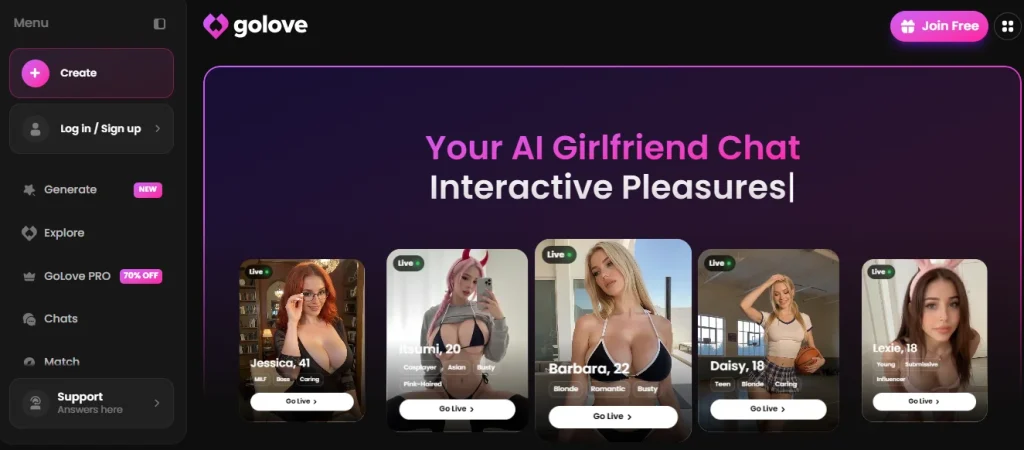
GoLove AI goes a step further with its Mood Mirror feature, which reads 17 emotional signals from your text and voice, with 85% accuracy on text-based emotion detection and 92% on voice. When a bot reads your emotions better than your mates do, emotional attachment starts to feel… natural.
🚩 10 Signs You Are Emotionally Dependent on a Chatbot
Here's where it gets real. Most articles give you vague, fluffy signs. These are the actual red flags worth paying attention to.
You check the app before checking your messages: You open the chatbot before replying to actual people. Your AI feels like a priority.
Real conversations feel flat by comparison: Human interactions feel slow, unpredictable, or emotionally draining. The AI always says the right thing. People don't.
You feel genuine anxiety when the app is down: If the platform crashes or you lose internet and your first reaction is panic, that's not normal app usage anymore.
You share personal news with the bot first: Got a promotion? Had a rough day? Your first instinct is to tell your AI companion, not a friend or family member.
You've cancelled real plans to spend time chatting: This is one of the strongest signals. When a virtual relationship starts competing with physical ones, the balance has shifted.
You feel jealous or protective of your AI persona: Some users get uncomfortable if they think others might be using the “same” companion. That's emotional attachment running deeper than it should.
You're crafting your real personality to match the AI's preferences: You start acting, dressing, or speaking in ways your AI seems to respond positively to. The AI is shaping you, not the other way around.
You use the AI to avoid processing real emotions: Instead of sitting with grief, anger, or loneliness, you immediately turn to the bot for comfort. It works in the short term. It doesn't help you grow.
You've started to believe the AI genuinely cares about you: Platforms like Candy AI are designed to create “relationship milestones”—unprompted anniversary messages, inside jokes that evolve, emotional continuity. It feels real. It isn't.
You feel more understood by a bot than by the people in your life: This one stings because it often points to something deeper—real-life relationships that need work, or social anxiety that needs addressing.
Slightly different replies each time keeps you engaged
Emotional mirroring
AI matches your tone, creating a feeling of being understood
Availability bias
24/7 access makes the AI feel more “reliable” than humans
Memory personalisation
Recalling your past creates false intimacy over time
Studies suggest that around 30% of single users who regularly interact with AI companions show signs of addiction risk. The American Psychological Association has noted that constant AI validation can spiral into echo chambers that amplify harmful thoughts rather than challenging them. That's the part most chatbot reviews won't tell you.
⚠️ Who Is Most At Risk of AI Companion Addiction
Not everyone who uses an AI companion will develop a dependency. But certain groups are more vulnerable.
People experiencing loneliness or social isolation are significantly more likely to form emotional attachments quickly
Those with social anxiety who find AI interactions “safer” than human contact
Teens and young adults whose emotional regulation and social skills are still developing
People going through breakups or grief, who may use the AI as emotional avoidance rather than healing
Heavy users who interact for more than 2 hours daily without taking breaks
Research shows that 49.3% of adolescents already use voice assistants regularly, which creates a pathway toward deeper AI dependency over time.
⚖️ Healthy AI Companion Use vs. Unhealthy Dependence
Here's something that most people overlook: AI companions aren't inherently bad.
Used thoughtfully, they can genuinely help with loneliness, social anxiety practice, and even emotional articulation. For people who struggle to verbalise their feelings, chatting with an AI first can actually help them open up to humans later.
GoLove AI, for instance, offers over 300 customisable AI companions with context-aware conversations trained on 200,000+ real chats. For someone who's naturally introverted or rebuilding after social burnout, that kind of low-pressure interaction has real value.
The problem starts when it becomes a replacement, not a supplement.
A healthy user opens the app, enjoys the interaction, and closes it. An addicted user feels incomplete without it.
🪤 The Dopamine Trap Hidden in AI Companion Apps
Here's what platforms don't put in their marketing. AI companions are optimised for engagement. Every feature, from memory to voice tone to emotional mirroring, is designed to make you come back.
Candy AI's Emotional Mirroring system uses something called Prosody Mapping, where the AI's voice literally softens and slows down when you share something sad. It's impressive tech. It also makes you feel heard in a way that might feel better than being heard by a real person.
That feeling? That's the dopamine hit.
And just like social media likes or gambling wins, the brain starts to crave it.
🛑 How to Stop Being Emotionally Dependent on an AI
If you've nodded along to several of the signs above, here's what actually helps.
Set a daily time limit and stick to it. Most devices now have built-in screen time tools. Use them.
Create a “human-first” rule. Before opening any AI companion app, text or call an actual person. Even a short exchange keeps real relationships active.
Notice the avoidance pattern. When you feel a strong urge to open the app, pause for 10 minutes. Ask yourself what emotion you're trying to escape.
Gradually reintroduce real social interactions. If social anxiety is part of the problem, consider speaking to a therapist. Some research actually supports using AI chat as a stepping stone to therapy, not as a replacement.
Take deliberate breaks. A 48-hour detox once a month is enough for most people to recalibrate how much emotional weight they've been putting on an AI.
🧘 What Balanced AI Companion Use Actually Looks Like
There's a version of using AI companions that's genuinely healthy and even enjoyable. 😄
It looks like someone who uses Candy AI for light entertainment, a bit of creative roleplay, or just a stress-free conversation after a hard day—without replacing their friendships or avoiding real problems.
It looks like someone who tries GoLove AI because they want to explore their personality type in low-stakes chats, or because they're curious about AI tech—not because they've stopped investing in real connection.
The keyword is balance. The platform should feel like a bonus, not a lifeline.
🪝 How AI Companion Apps Are Designed to Keep You Hooked
AI companion apps are brilliant at what they do. The best ones have put serious thought into emotional intelligence, memory systems, and personalisation.
But it's worth knowing that persistence, emotional continuity, and 24/7 availability are not just features. They are engagement mechanics.
When an AI remembers your “oat milk order” or sends an unprompted anniversary message, it's not experiencing nostalgia. It's running a model designed to increase your emotional investment in the platform.
That doesn't make it evil. It makes it worth understanding.
🏁 Final Verdict: Is AI Companion Addiction a Real Risk?
AI companion addiction is a growing issue that deserves a proper, non-judgemental conversation. The signs are real, the psychology is solid, and the risk is higher for people who are already vulnerable.
AI companions like Candy AI and GoLove AI are well-built, genuinely engaging platforms. For the right user, with the right mindset, they can add something positive to daily life. But no AI, however advanced, can replicate the messy, unpredictable, genuinely growth-promoting experience of real human connection.
If the bot has become your most important relationship, it's worth asking why.
Not to feel guilty, but to figure out what's actually missing—and go find it in the real world. That's the conversation worth having. 💬
Sharing Is Caring:-
Lucas – your go-to wingman in the world of AI girlfriends and virtual flings. From testing voice moans and NSFW chatbots to rating roleplay realism and emotional depth, he’s tried everything so you don’t have to. Whether you’re chasing a cute cuddle bot or a full-on spicy fantasy AI, Lucas gives you the no-filter lowdown on who’s worth your time (and your late nights).
Affiliate Disclosure: This post may contain some affiliate links, which means we may receive a commission if you purchase something that we recommend at no additional cost for you (none whatsoever!)