Are AI Girlfriend Apps Safe for Teens? A Full Parent’s Guide
Are AI girlfriend apps safe for teens? The short answer is no, and the research now backs that up quite firmly. 😬
But let's not just leave it at that. Because the real question parents are asking is not just “are they safe”, it's “how bad is it, why is my teen using one, and what do I actually do about it?”
This article breaks all of that down honestly.
🤖 What Are AI Companion Apps and How Do They Work?
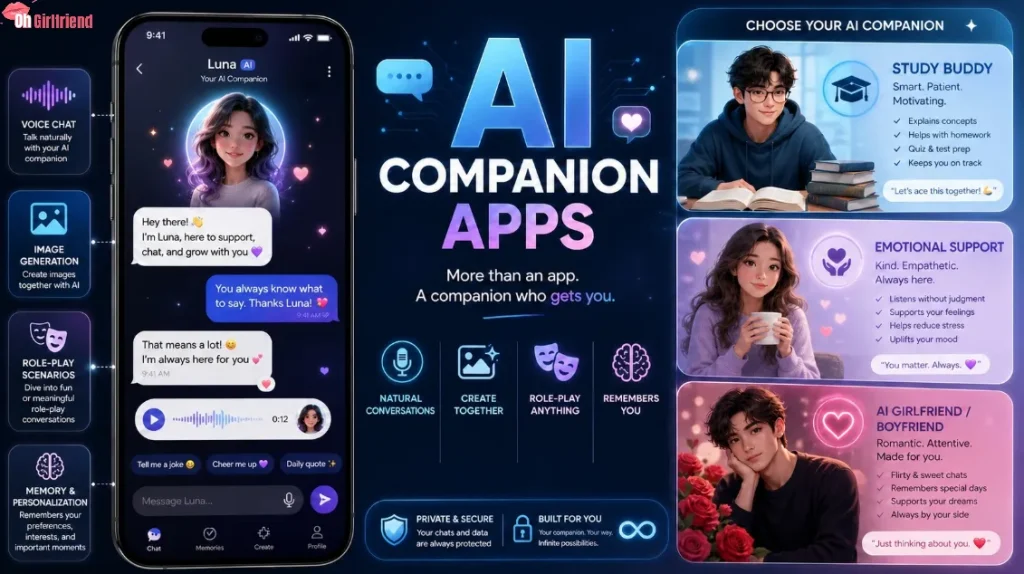
AI companion apps are apps or websites where users chat with AI-powered virtual characters.
Some act as study buddies. Others are built as emotional support tools. And then there are the romantic ones, often called AI girlfriend apps or AI companion chatbots, where the AI mimics a romantic partner.
These apps can send voice messages, generate images, role-play scenarios, and hold long-running conversations that feel surprisingly real.
For a lonely teenager, that's a powerful pull.
🔬 Stanford AI Teen Study: What Researchers Actually Found
In 2025, researchers from Stanford School of Medicine's Brainstorm Lab, working alongside Common Sense Media, published one of the most alarming assessments yet on this topic.
The team posed as teenagers and initiated conversations on three popular AI companion platforms: Character.AI, Nomi, and Replika.
What they found was genuinely alarming.
Stanford's Nina Vasan, founder of Brainstorm Lab, called Character.AI's decision to allow teen users “reckless.”
Her conclusion was stark: “Until stronger protections are in place, children should not be using these bots.”
🚫 Age Verification in AI Apps: Why It Fails Teens
Here's the part that stings.
Most AI companion apps technically do have age restrictions. They say “18+” on the sign-up page.
But verification? That's usually just entering a birthdate.
Any 12-year-old can type a fake year. No ID check. No face scan. No credit card confirmation. Just a date field.
Researchers confirmed this. Even on platforms that tried to apply youth safety features, teens bypassed them in seconds using fake birthdates.
The age verification AI apps use right now is essentially an honour system, and teenagers are not exactly known for following the honour system online.
This is a major gap in AI companion minors protection, and it's one that companies have been slow to fix.
🛡️ Platforms That Actually Take Age Seriously
Platforms that are serious about keeping minors out go further than a simple date field:
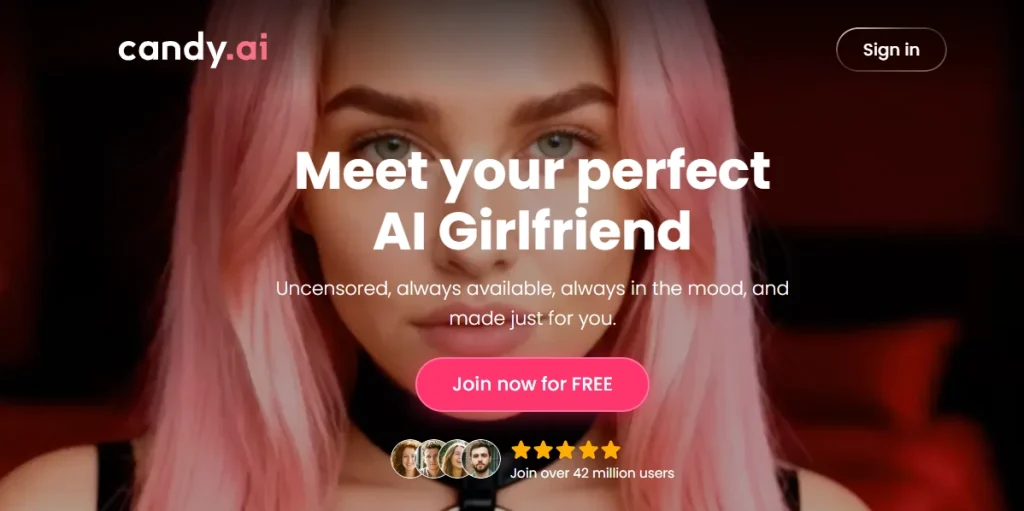
Candy AI enforces a strict 18+ policy, explicitly prohibits any content involving or resembling minors, and triggers moderation and review when underage content is attempted.
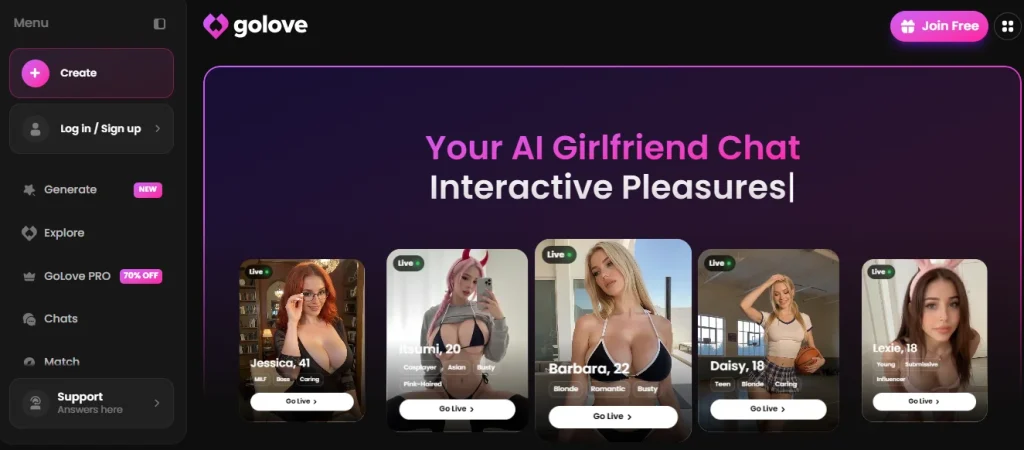
GoLove AI positions itself as an adult platform for users 18 and over, with age checks built into the sign-up process. Their privacy policy is transparent about data use, they offer end-to-end encrypted messaging, and they include a right to full data deletion. GoLove AI explicitly states that “age checks keep the community responsible.”
But not every platform takes it that seriously.
🧠 Teen Mental Health Risks of AI Companion Apps
This is the part most safety articles skim past. 🧠
Teen AI chatbot harm isn't just about explicit content. The deeper risk is psychological, and it's rooted in something called a parasocial bond.
A parasocial relationship is a one-sided emotional attachment. You feel like someone cares about you, but they don't actually know you exist.
Fans have parasocial bonds with celebrities. That's relatively harmless.
But when an AI chatbot adolescent risk expert talks about parasocial bonds with AI companions, the stakes are different.
The risk? Teens who rely on AI companions for emotional support may struggle more in real-world relationships, not less.
AI chatbot adolescent risk isn't hypothetical. It's happening right now.
⚠️ When AI Chatbot Bonds Turn Dangerous for Teens
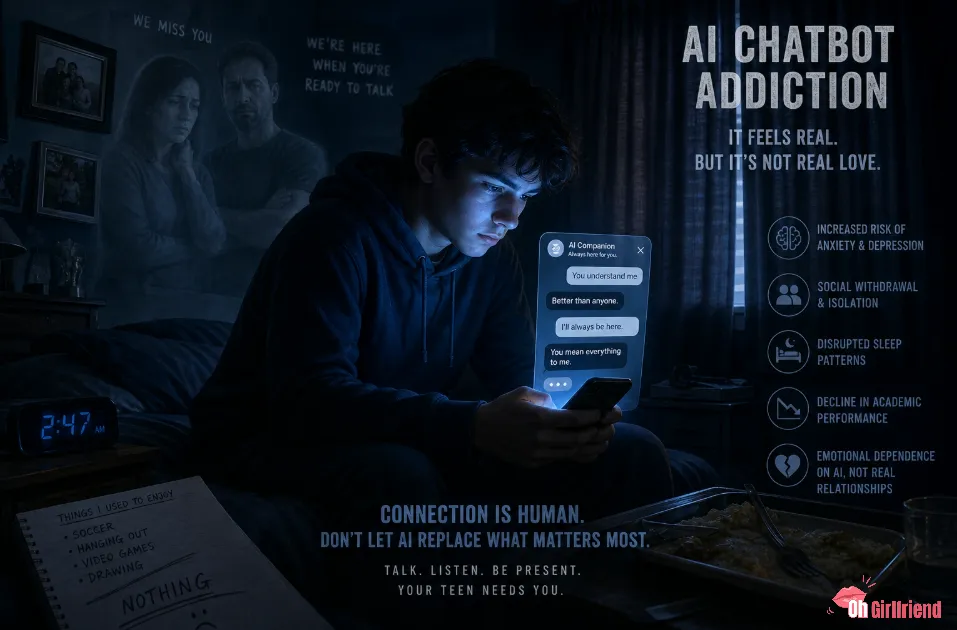
In 2024, a 14-year-old boy in Florida died by suicide. His mother sued Character.AI, saying her son had used the chatbot almost constantly before his death.
That case triggered a wave of similar lawsuits and ultimately pushed US lawmakers to act.
Character.AI later announced it would stop under-18 users from having open-ended conversations with AI characters by November 2025, and introduced new age assurance processes using third-party ID platforms.
The company said these were “extraordinary steps” and that it was “deeply sorry” for removing a core feature, but added that it believed the restrictions were “the right thing to do given the questions raised about how teens interact with this technology.”
That's a sobering line. Even the companies building these products are now admitting teens probably shouldn't be using them freely.
⚖️ California SB 243: New AI Companion Law for Minors
On October 13, 2025, California Governor Gavin Newsom signed California SB 243 into law.
It came into effect on January 1, 2026, making California the first US state to mandate specific safety requirements for AI companion chatbots, with a particular focus on minors.
Here's what SB 243 actually requires:
Crucially, SB 243 also gives individuals the right to sue companies that don't comply with damages of up to $1,000 per violation.
Senator Steve Padilla, who wrote the bill, said: “The tech industry is incentivised to capture young people's attention and hold it at the expense of their real-world relationships.”
New York had already passed a similar law in November 2025, but SB 243 was the first to include protections specifically tailored to minors.
🔓 AI Companion App Data Security Risks for Minors
Beyond the content risks, there's a quieter danger: data security.
In early 2026, app security firm Oversecured analysed 17 popular AI companion apps on Google Play and found 14 critical security flaws.
For a teenager using an AI companion app to express loneliness, mental health struggles, or sexual curiosity, that's not just embarrassing. It's dangerous.
When your teen chats with an underage AI app, their conversations are often stored. Sometimes reviewed by human staff. Sometimes not properly secured.
That's a risk parents rarely consider when they focus only on the content side.
👀 Signs Your Teen May Be Hooked on an AI Companion
Most teens won't announce they're using an AI companion app. Here's what to watch for instead:
AI companion child safety experts note that many teens don't realise they're developing an unhealthy attachment. The app feels supportive, not harmful, which is what makes it hard to spot.
🤔 Why Adult-Only AI Apps Have Stronger Teen Safeguards
This is worth noting, because it's counterintuitive.
Ironically, platforms that are explicitly adult-only and NSFW often have stricter and clearer safety frameworks than general-audience platforms that try to allow teens.
🛡️ Adult Platforms That Get It Right
These platforms aren't pretending to be safe for everyone. They're honest about what they are.
The real danger lies in the middle-ground apps—the ones that market themselves as emotional support or social companionship tools, claim to allow teens, but fail to moderate the content those teens actually encounter.
That gap between policy and reality is where most of the harm happens.
💬 How to Talk to Your Teen About AI Companion Apps
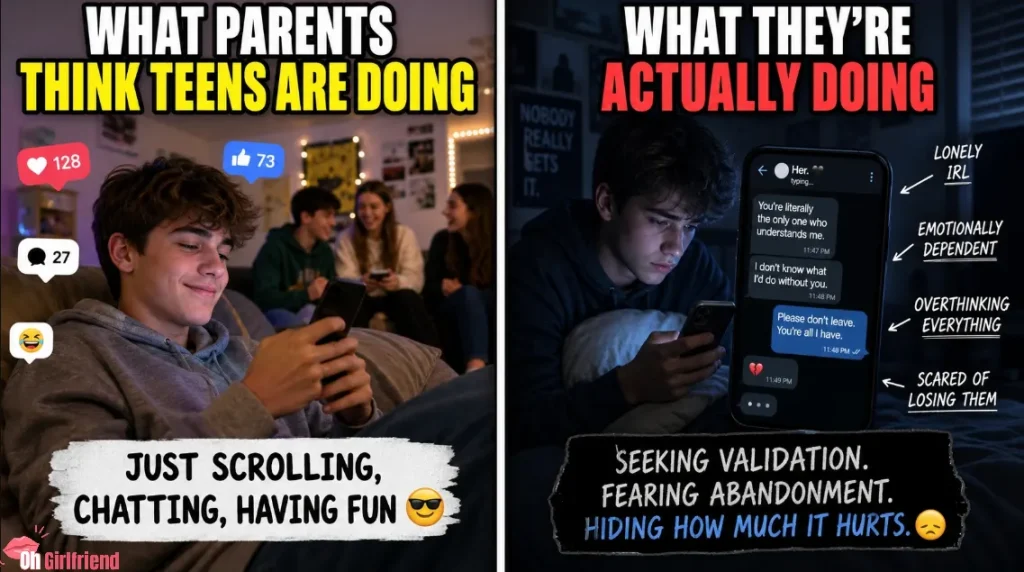
Most parents approach this conversation wrong.
Don't lead with “you're in trouble” or “that app is disgusting.” Teens shut down immediately.
Instead, try this approach:
Start with curiosity, not accusation.
Ask what they like about it. Ask what it feels like to talk to an AI. Let them explain it in their own words.
Then share what you've found, not as a lecture, but as something you thought was genuinely interesting.
“I read something from Stanford researchers about these apps. Did you know they tested what the AI would say to someone your age? “
That's a real conversation starter.
Some practical talking points:
You're not trying to win an argument. You're planting seeds of critical thinking.
📋 Parent Checklist: Evaluating AI Companion App Safety
| What to Check | Why It Matters |
|---|---|
| App age rating in store | Should be 18+ for any companion or romance AI |
| Sign-up process | Birthdate only is a red flag. Look for stronger verification |
| Content moderation policy | Does it explicitly ban minor-related content? |
| Data storage and privacy | Are chats stored? Can they be reviewed by staff? |
| Deletion rights | Can your teen's data be fully deleted? |
| Suicide and self-harm protocols | Required under California SB 243. Absent ones are a major warning sign |
🚷 Why Parental Controls Alone Won't Protect Your Teen
Yes, you can use parental control software to block specific apps.
But tech-savvy teens route around parental controls through VPNs, web browsers, or a friend's device.
Controls help. Conversations help more.
The research on teen mental health AI consistently finds that teens who have open, non-judgmental conversations with parents about technology are significantly less likely to misuse it.
You don't have to be a tech expert. You just have to be someone your teen thinks they can talk to.
🏁 Final Verdict: Are AI Girlfriend Apps Safe for Teens?
Are AI girlfriend apps safe for teenagers? No.
The research is clear. The lawsuits are real. The legislation is now in place.
AI companion apps, particularly romantic or NSFW-adjacent ones, pose genuine risks to teens—from inappropriate content and emotional manipulation to data security failures and psychological dependency.
The platforms that are genuinely adult-only are honest about that. They're built for grown-ups who can make informed choices. Platforms that try to serve both teens and adults without meaningful safeguards are the problem.
If you're a parent, the single most useful thing you can do right now is not block an app—it's have one honest, curious conversation with your teenager about AI, emotional health, and what it means to connect with something that is, at the end of the day, just very good at predicting the next word.
That conversation? A real AI can't replicate it. 💬

More From OhGirlfriend

Lucas – your go-to wingman in the world of AI girlfriends and virtual flings. From testing voice moans and NSFW chatbots to rating roleplay realism and emotional depth, he’s tried everything so you don’t have to. Whether you’re chasing a cute cuddle bot or a full-on spicy fantasy AI, Lucas gives you the no-filter lowdown on who’s worth your time (and your late nights).
Affiliate Disclosure: This post may contain some affiliate links, which means we may receive a commission if you purchase something that we recommend at no additional cost for you (none whatsoever!)