Romance Authors Are Secretly Using AI to Publish 6x Faster
Romance authors using AI in 2026 are not just dabbling with it anymore. They are building entire publishing workflows around it, and the results are wild.
From smashing through writer's block to publishing four books a year instead of one, AI has quietly become the romance genre's most productive dirty little secret. 😏
The shift started gradually. A few indie authors quietly started using AI tools to draft faster. Then word spread through Facebook groups, Discord servers, and TikTok.
Now, in 2026, it is genuinely hard to find a prolific indie romance author who has not at least tried an AI writing assistant.
This article breaks down what is actually happening. Not the hype version.
The real version, with real workflows, real limits, and honest observations.
❤️ Why Romance Authors Adopted AI Faster Than Anyone

Romance was never going to be the genre that resisted AI. It is structured, trope-driven, and emotionally precise. Those features make it almost ideal for AI collaboration.
The genre has always been fast. Romance readers devour books. Some read two or three a week.
That creates enormous pressure on authors to publish regularly, and consistently. Many romance authors, particularly indie authors on platforms like Kindle Unlimited, already treat writing like a business. AI fitted neatly into that mindset.
Romance is also the biggest fiction genre on Amazon, generating over $1.4 billion in annual sales. The market rewards speed and volume.
Authors who figured out how to use AI without sacrificing quality gained a very real competitive edge.
There is also a practical reason. Romance follows well-understood emotional structures. Meet-cute, rising tension, conflict, crisis, resolution.
These are patterns AI can understand and replicate reliably.
Unlike literary fiction, where the whole point is to break conventions in surprising ways, romance leans on familiar structures executed with emotional precision. That is a much easier brief for an AI.
💖 How Romance Author Behaviour Shifted in 2026
A couple of years ago, most authors using AI kept it quiet. There was real stigma. Readers were suspicious.
Fellow authors were judgemental. Many writers used AI in private and said nothing publicly.
That has changed significantly. The conversation in 2026 is less “should I use AI?” and more “how exactly should I be using it?”
Author communities that once debated whether AI was cheating are now sharing prompt strategies and workflow tips openly.
Several factors drove this shift.
First, the tools got genuinely good. Early AI writing assistants produced obvious, robotic prose. They repeated phrases, forgot character details, and generated generic emotional beats that felt hollow.
Newer tools, particularly those trained specifically on fiction, produce results that are noticeably better and actually useful in a real writing workflow.
Second, the economics became impossible to ignore. Authors using AI are publishing more. Some are reporting four to six books a year when they previously managed two.
In Kindle Unlimited, where earnings are tied to page reads and visibility requires regular releases, that difference is massive.
Third, a few high-profile voices normalised it. Bestselling authors like Hugh Howey publicly endorsing Sudowrite made it harder to dismiss AI as something only struggling amateurs used.
🤩 Exactly How Romance Authors Are Using AI Daily
This is where most articles go vague. They say “AI helps with writing” and leave it there. Let's be more specific.
Plotting and Story Structure
Many romance authors start with AI at the plotting stage. They bring a basic concept and use AI to brainstorm plot beats, conflict points, and character backstory.
Typical prompts look like this:
Give me five ways an enemies-to-lovers tension can escalate in a small-town settingWhat is an unexpected vulnerability for a billionaire hero who appears emotionally unavailable?Suggest three complications that could derail a fake-dating plot right before the emotional payoffThe AI does not write the story for them. It generates options. Authors pick what resonates, combine ideas, and build from there. It is more like brainstorming with a very well-read, never-tired colleague than it is like getting a story handed to you.
Tools like Sudowrite's Canvas feature are built specifically for this. Authors explore plot points, character secrets, and plot twists in a dedicated planning space. Everything stays organised in one place rather than scattered across notes apps and scrap documents.
Drafting Scenes
This is where AI has the most direct impact on speed. Authors write scene beats, then use AI to generate prose from those beats.
A scene note like “they finally argue about the lie he told in chapter three, she forgives him after he explains his real reason” can become 600 to 800 words of actual prose in seconds. The author then edits, adjusts voice, and moves on.
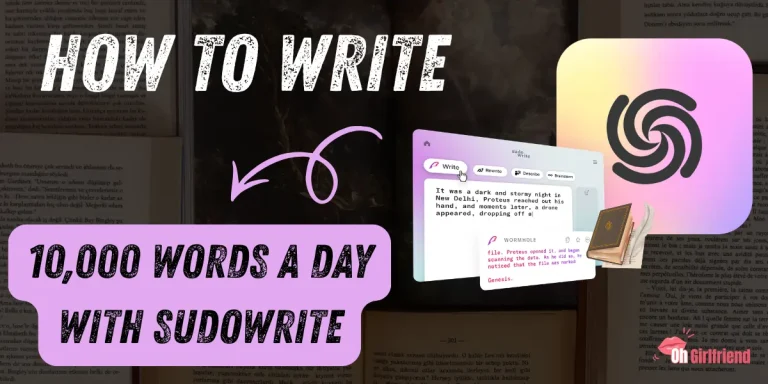
Sudowrite's Write feature analyses existing characters, tone, and plot arc and suggests the next 300 words in the author's voice. It even generates multiple options, so the author can pick the direction they prefer. That is genuinely useful on days when the words simply will not come.
Fiction writers using AI complete first drafts 40% faster on average, according to publishing industry research. Sudowrite users specifically report drafting speeds up to 400% faster. That statistic sounds unbelievable until you watch the workflow in action.
Sensory Description and Emotional Depth
One of the most useful specific applications for romance is improving scene description. Romance scenes need to feel physical and emotionally alive. Generic AI often defaults to visual description only, which feels flat.
Sudowrite's Describe tool generates descriptions across all five senses. An author can select a flat paragraph, click Describe, and receive options that include the scent of his cologne, the scratch of wool against her cheek, the catch in breath when he says her name.
These details transform a functional scene into something that lands emotionally.
For romance specifically, where scenes like the first touch or the emotional breakdown need real weight, this kind of sensory layering matters enormously.
Editing and Rewriting
The editing stage has also changed. Authors use AI to rewrite sentences that are not working, expand scenes that feel rushed, and get feedback on pacing and structure.
Sudowrite's Expand feature is particularly useful here. If a draft covers an important emotional beat in two sparse sentences, Expand builds it into a full scene with proper tension, dialogue, and resolution. The confrontation scene that gets shortchanged in a fast first draft can be restored properly without going back and rewriting from scratch.
The Rewrite feature works like a revision assistant that never gets tired and never has an ego. Ask it to rewrite a sentence with more vulnerability, more irony, or more heat. It delivers options without argument.
💋 AI Romance Writing Use Cases That Actually Work
The romance genre has specific needs that general-purpose AI simply does not handle well. This is worth understanding properly.
Heat Level Control
Romance spans a wide range of content, from clean and sweet to explicitly steamy. Most general AI tools treat anything warmer than a Hallmark movie as a policy issue.
Writers repeatedly hit refusals at exactly the moments they need help most.
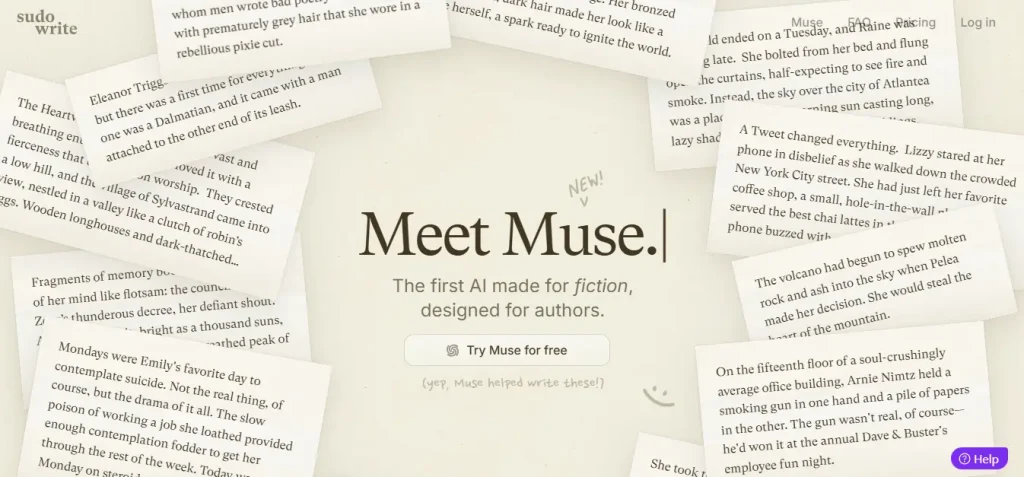
Tools like Sudowrite's Muse model are trained specifically on fiction and do not apply those content filters.
Romance authors can write at their actual heat level without engineering prompts to trick the AI into cooperating.
This is not a minor convenience. For authors writing dark romance or spicy contemporary romance, an AI that refuses the most important scenes is simply useless.
The difference between a romance-specific AI and a general-purpose chatbot is the difference between a tool that works and one that doesn't.
Trope Execution
Enemies-to-lovers, forced proximity, second chance, fake dating, slow burn, fated mates. Romance readers choose books by trope.
AI that understands these conventions can help authors execute them with appropriate tension, pacing, and emotional beats.
Generic AI treats tropes as templates and produces generic output.
Fiction-trained AI understands that an enemies-to-lovers setup requires specific escalation, that grudging respect has to be earned across scenes, and that the moment the enemies stop fighting their attraction needs proper build-up to land correctly.
Character Consistency in Series
Romance series are a staple of the indie market. Readers follow authors through five, eight, ten-book series.
Keeping character voices, relationship history, and world details consistent across that many books is genuinely difficult.
Sudowrite's Story Bible tracks character names, personality traits, emotional triggers, relationship status, and key story events.
The Series Folder extends this across multiple books. When writing book four, the AI has context from books one through three.
That consistency removes a significant source of reader frustration and author headache.
📚 Publishing More Books With AI and the KU Strategy
Kindle Unlimited has fundamentally shaped how indie romance authors approach publishing. The platform rewards regular releases.
Authors who publish consistently show up in recommendations more often and earn more from page reads.
Here is a simple breakdown of how AI has changed the publishing pace for indie romance authors:
| Without AI | With AI Assistance |
|---|---|
| 1 to 2 books per year | 4 to 6 books per year |
| First draft in 3 to 4 months | First draft in 3 to 5 weeks |
| Editing takes 4 to 8 weeks | AI-assisted editing takes 2 to 3 weeks |
| Writer's block delays common | Blocked scenes generated in minutes |
| Burnout risk high | Output sustained without same fatigue |
These are real patterns reported by authors using AI tools in their workflows. They are not guarantees, and individual results vary significantly, but the direction is consistent.
The ability to publish quarterly rather than annually changes everything in KU.
More releases mean more entry points for new readers, more visibility in the algorithm, and more stable monthly earnings.
✍🏻 Why Sudowrite Stands Out for Romance Writers
There are plenty of AI writing tools around in 2026. Most of them are built for general content, marketing copy, or business writing.
For fiction authors, and especially romance authors, that matters.
Sudowrite was built specifically for fiction writers, by fiction writers. Its founders are writers themselves.
The Muse 1.5 model is proprietary, trained exclusively on fiction, and it handles mature themes without content restrictions. For romance authors, that is the whole game.
Key features that make Sudowrite particularly useful for romance:
Sudowrite starts at $10/month after a free trial, with no credit card required to start. The Professional tier at $22/month offers the best value for authors publishing regularly.
Romance author Kayla puts it simply: “I use Sudowrite for auto-writing when I get stuck. It helps generate ideas that I can build on and shape into my own.”
For Gianmarco, a romance and sci-fi author, the impact was even more direct: “I published 270,000 words last year and I'm on track to surpass that this year, all thanks to Sudowrite's efficiency. I wouldn't be where I am without it.”
🔥 Claim 200K Bonus Credits for Your Next Romance Obsession
Get 200,000 bonus credits with Sudowrite and write emotionally intense slow burns, spicy encounters, and character chemistry that stays consistent across every chapter.

😤 Do Readers Actually Notice AI in Romance Books?
Here is where it gets honest. Not every reader is thrilled, and not every AI-assisted book is good.
A genuine concern among romance readers is quality. Some authors have rushed poor-quality drafts to market using AI, relying on speed without doing the necessary editing work.
Readers notice. They leave reviews mentioning repetitive phrasing, shallow emotional beats, and characters that feel inconsistent.
This is not an AI problem exactly. It is a process problem. AI generates first drafts. First drafts always need editing.
Authors who skip the editing step and publish raw AI output are making a mistake that has nothing to do with the tool and everything to do with the process.
The authors getting the best results are using AI to generate more material to work with, not to replace the work of thinking and editing.
They still develop their own characters, choose their own emotional arcs, and do significant revision before publishing.
89% of writers using specialised fiction AI tools report improved prose quality compared to general AI.
But the quality comes from the combination of a good tool and a thoughtful author, not from the tool alone.
🏛️ The Ethics and Originality Debate in AI Writing
This is the conversation the romance community has not fully resolved, and probably will not anytime soon.
There are genuine questions worth taking seriously.
Training data. AI tools are trained on published text. Some of that text was written by human authors who did not consent to their work being used this way. This is a live legal and ethical debate, not a settled one.
Originality. If an AI generates your prose, what exactly is your creative contribution? Most authors using AI thoughtfully argue that their contribution is the character conception, the emotional arc, the thematic choices, and the editorial decisions.
The AI provides raw material. They shape it. That is similar, in some ways, to how ghostwriting or developmental editing has always worked.
But it is a question worth thinking about honestly rather than dismissing.
Disclosure. Amazon requires disclosure of AI-assisted content during upload. Many self-publishing platforms have similar policies.
Authors who fail to disclose are breaking platform terms, and that is increasingly risky as detection improves.
The romance community is still working through all of this. The authors who are engaging with these questions honestly, rather than avoiding them, tend to produce better work and maintain more trust with their readers.
| Free Trial 200K bonus credits waiting — Sudowrite's fiction AI, no content restrictions. Claim → |
⚠️ What AI Romance Writing Articles Skip Over
Here is the stuff that tends to get left out of enthusiastic AI writing guides.
AI makes some things worse before it makes them better. If you go into AI-assisted drafting without a solid outline, the output is messy. AI needs direction.
Without it, you get prose that goes in circles, loses character voice, and contradicts earlier scenes. The fix is to invest in planning before drafting, which some authors resist.
The emotional core still has to come from you. AI can generate technically correct emotional beats. It can describe a character's grief or a couple's reconciliation with appropriate language.
But the emotional specificity that makes readers cry or stay up until 2am finishing a book?
That comes from the human author's understanding of the characters and the story. AI assists. It does not feel.
Speed can become a trap. Publishing faster is good up to a point. Publishing so fast that books feel similar, lack distinctiveness, or arrive with editing errors is bad for long-term author reputation.
Some authors have found that AI-assisted speed helped them in the short term and hurt their reader relationships when quality slipped.
Not all AI tools handle romance the same way. This matters more than most reviews acknowledge. A tool that refuses steamy content mid-scene is not just inconvenient.
It breaks the writing flow entirely and makes the tool useless for a significant portion of romance writing.
Choosing a tool built for fiction, with appropriate content handling, is not a small detail.
🚨 Real AI Writing Limits Romance Authors Must Know
Before any author commits to an AI-first workflow, here are the genuine limitations to factor in.
Voice drift. The longer a manuscript gets, the harder it is for AI to maintain consistent narrative voice without careful prompt management and Story Bible updates. Authors writing 100,000-word novels need to actively manage this.
Generic emotional language. AI defaults to clichés unless directed away from them. “Her heart pounded” and “she felt a connection she couldn't explain” appear constantly in unedited AI output. Good editing removes them. Lazy editing does not.
Continuity errors. Even with tools like Story Bible, continuity management across long manuscripts requires author attention.
Details established early in a book can get lost in later AI-generated sections if the author is not tracking carefully.
Cost over time. At $10 to $22 per month, Sudowrite is affordable. But combined with cover design, editing, formatting, and marketing costs, indie publishing expenses add up.
AI tools are an investment that needs to earn its return through increased output or quality.
💡 Where AI in Romance Writing Is Headed Next
The direction seems fairly clear, even if the pace is uncertain.
AI writing tools will become more integrated with the publishing workflow. Tools that currently help with drafting will expand into editing, formatting, blurb writing, and reader targeting. The workflow will get tighter.
Romance will continue to be one of the leading genres in AI adoption, because the economics make sense and the structure of the genre supports AI collaboration well.
Reader expectations will adjust. Just as readers adapted to the self-publishing boom of the early 2010s, they will adapt to AI-assisted publishing. What they will not forgive is deliberate quality compromise.
Authors who use AI to enhance their work will do well. Authors who use it to skip the work entirely will struggle.
Tools like Sudowrite will keep improving. Muse 1.5 is already a significant step forward from earlier models.
Future versions will handle longer context, better voice matching, and more reliable continuity across series. The ceiling is not in sight yet.

More From OhGirlfriend
💥 Is AI Worth Using for Romance Writing in 2026
Honestly? For most indie romance authors, yes. The productivity gains are real. The quality, when managed properly, is genuinely good.
The tools designed for fiction handle the specific needs of the genre far better than general-purpose AI.
The authors getting the best results are the ones treating AI as a writing partner rather than a replacement.
They bring the characters, the emotional stakes, the tropes they love, and the editorial judgement.
AI brings speed, options, and the ability to push through blocks that would previously have cost days or weeks.
Sudowrite sits at the top of the category for a clear reason. It was built by fiction writers, for fiction writers.
It understands what a romance manuscript actually needs, handles mature content without fuss, and keeps character details consistent across the full length of a novel or series.
The blank page is no longer the enemy. The question in 2026 is not whether to use AI. It is how to use it well enough that your readers feel every word, even if an AI helped you find it. 💕

Lucas – your go-to wingman in the world of AI girlfriends and virtual flings. From testing voice moans and NSFW chatbots to rating roleplay realism and emotional depth, he’s tried everything so you don’t have to. Whether you’re chasing a cute cuddle bot or a full-on spicy fantasy AI, Lucas gives you the no-filter lowdown on who’s worth your time (and your late nights).
Affiliate Disclosure: This post may contain some affiliate links, which means we may receive a commission if you purchase something that we recommend at no additional cost for you (none whatsoever!)