How to Write a Romance Novel With Sudowrite in 30 Days Flat

So you've read enough Nora Roberts, Colleen Hoover, and smutty BookTok recs to fill a library. And now you're sitting there thinking, I could write something like this. Good. You absolutely can.
Writing a romance novel with Sudowrite in 30 days is not just possible. It's genuinely the most practical path for first-time authors who want real output, not just a Word doc graveyard.
Sudowrite is an AI writing tool built specifically for fiction. Not essays. Not marketing copy. Actual novels. And romance, with all its heat levels, tropes, emotional arcs, and slow burns, is exactly where it shines.
This guide gives you a proper 30-day plan. Real steps. Honest expectations. No fluff.
🤷♀️ What Is Sudowrite, Exactly?
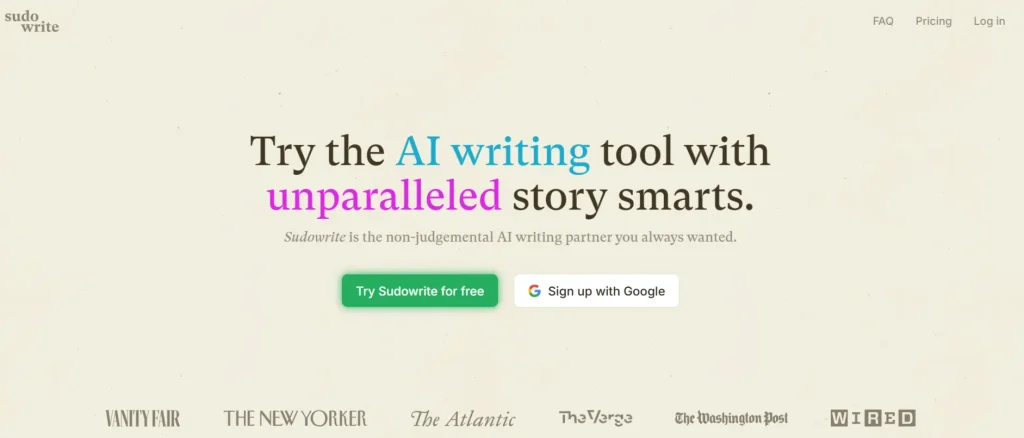
Sudowrite is an AI writing partner designed for fiction writers. It was built by writers Amit Gupta and James Yu, and it runs on a mix of GPT-4 and its own proprietary fiction model called Muse 1.5, which is trained specifically for storytelling.
It's not ChatGPT slapped into a text box. It understands:
Bestselling author Hugh Howey called it “scary good.” And honestly? That checks out.
You can try it free with no credit card needed. Plans start at $10/month after the trial.
🤔 Hidden Truths About Sudowrite Most Reviews Skip
Here's the bit nobody really says out loud.
Sudowrite won't write your novel for you. It's a collaborator, not a ghostwriter. If you dump a vague prompt and expect a finished manuscript, you'll be disappointed.
But if you show up with clear characters, a rough idea, and a willingness to direct the AI like a very talented intern? You'll be genuinely surprised by what comes out.
Also: credits matter. Each tool use consumes credits. If you're a heavy user, the base plan may feel tight. Factor that in before you choose a pricing tier.
📝 Before Day 1: Set Up Your Sudowrite Account
Do this the day before you start. Don't lose your Day 1 momentum to admin.
- Go to sudowrite.com and sign up (Google login works)
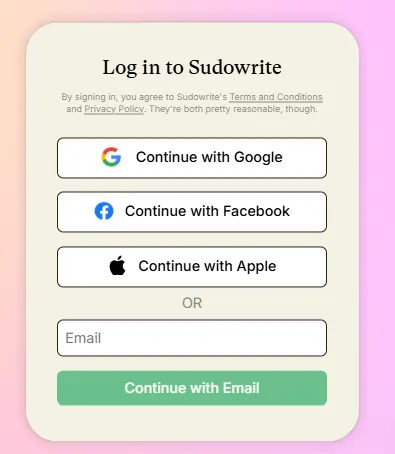
- Start your free trial (no card needed)
- Create a new Project and name it after your romance novel
- Explore the interface: Story Bible, Write, Describe, Rewrite, Expand, Brainstorm
- Bookmark the Plugins section. You'll want the romance-specific ones later.
💖 30-Day Romance Novel Writing Plan Using Sudowrite
Here's the honest truth about structure. A romance novel is roughly 80,000 to 90,000 words. You're not going to draft all of that in 30 days unless you're superhuman.
What you can do is:
That gets you a rough first draft. A real, messy, readable, improvable draft. And that's the goal.
🔄 Week 1: Building Your Foundation (Days 1-7)
This is the most important week. Skip this, and your whole draft collapses by chapter 5.
Day 1-2: The Brain Dump
Open Sudowrite's Story Bible and hit the Braindump section.
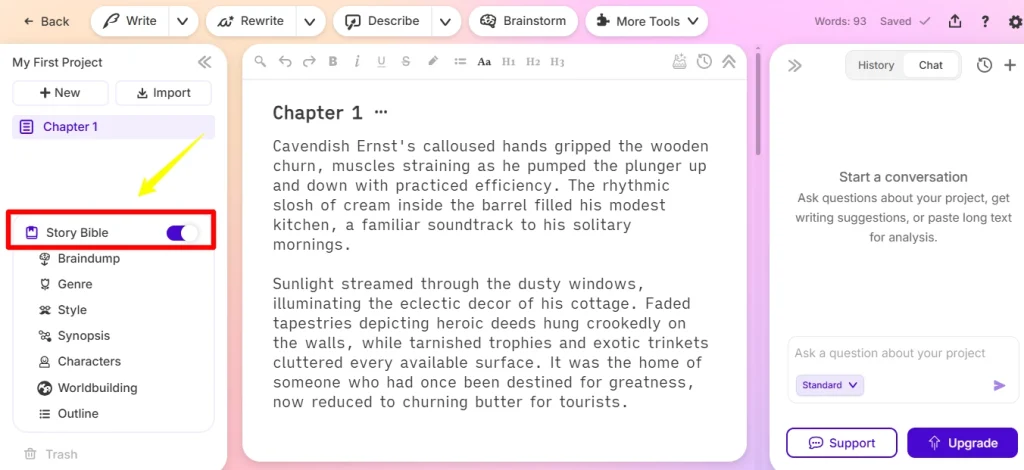
Pour everything in. Don't filter.
The more you give Sudowrite here, the better every single thing it generates later.
Be specific. “Slow-burn enemies-to-lovers set in a competitive Scottish bakery” gives Sudowrite something to work with. “Two people fall in love” gives it almost nothing.
Day 3: Build Your Characters
Go to the Characters section in Story Bible.
For a romance novel, you need at minimum:
Use Sudowrite's Brainstorm tool to generate character details. It'll suggest backstories, personality contradictions, and quirks you wouldn't have thought of.
Important: Romance readers are smart. They spot cardboard characters instantly. Give your leads actual flaws, not cute ones. Real ones. The kind that create actual story conflict.
Day 4: Pick Your Subgenre and Tropes
Sudowrite has romance-specific plugins including:
Head to the Plugins section and search “romance.” You'll find 1,000+ community tools built specifically for the genre.
Choose one primary trope. One or two secondary tropes max. Stacking five tropes on a first novel is a recipe for a messy middle.
| Trope | Best For | Challenge |
|---|---|---|
| Enemies to Lovers | High tension, sharp dialogue | Keeping conflict believable |
| Forced Proximity | Natural intimacy buildup | Avoiding slow pacing |
| Second Chance | Deep emotional resonance | Justifying the original separation |
| Fake Dating | Comedic tension | Making the “fall” feel earned |
| Fated Mates | Fast emotional acceleration | Can feel unearned if rushed |
Day 5-6: Outline Your Three Acts
Use Sudowrite's Canvas feature for this. It's a visual brainstorming space where you can map plot points, character arcs, and major scene beats.
A standard romance structure:
Act One (roughly 20% of your novel):
Act Two (roughly 60% of your novel):
Act Three (roughly 20% of your novel):
Sudowrite's Story Bible will generate a chapter-by-chapter outline once you've fed it your synopsis, characters, and genre.
Day 7: Review and Refine Your Story Bible
Before you write a single scene, read through your full Story Bible.
Ask yourself:
Edit the Story Bible now. It's much easier to fix here than inside 50,000 words of draft.
🔄 Week 2: Writing Act One (Days 8-14)
Target: 1,500 to 2,000 words per day. That's roughly 10,000 to 14,000 words by end of week.
Day 8-9: The Opening Chapter
Use Sudowrite's Blank Page Button inside Story Bible.
It will generate three different opening options for you. Pick the one that best fits your voice, then heavily edit it. The AI gives you a skeleton. Your voice gives it life.
Your opening chapter must do three things:
- Introduce your FMC and make readers care about her immediately
- Establish the tone (is this a spicy enemies-to-lovers with banter, or an emotional second-chance slow burn?)
- End with a hook
Common mistake: First-time authors open with backstory or weather. Don't. Open mid-action or mid-feeling.
Day 10-11: The Meet-Cute or Meet-Disaster
This is the first scene where your leads interact. Use Sudowrite's Write tool here.
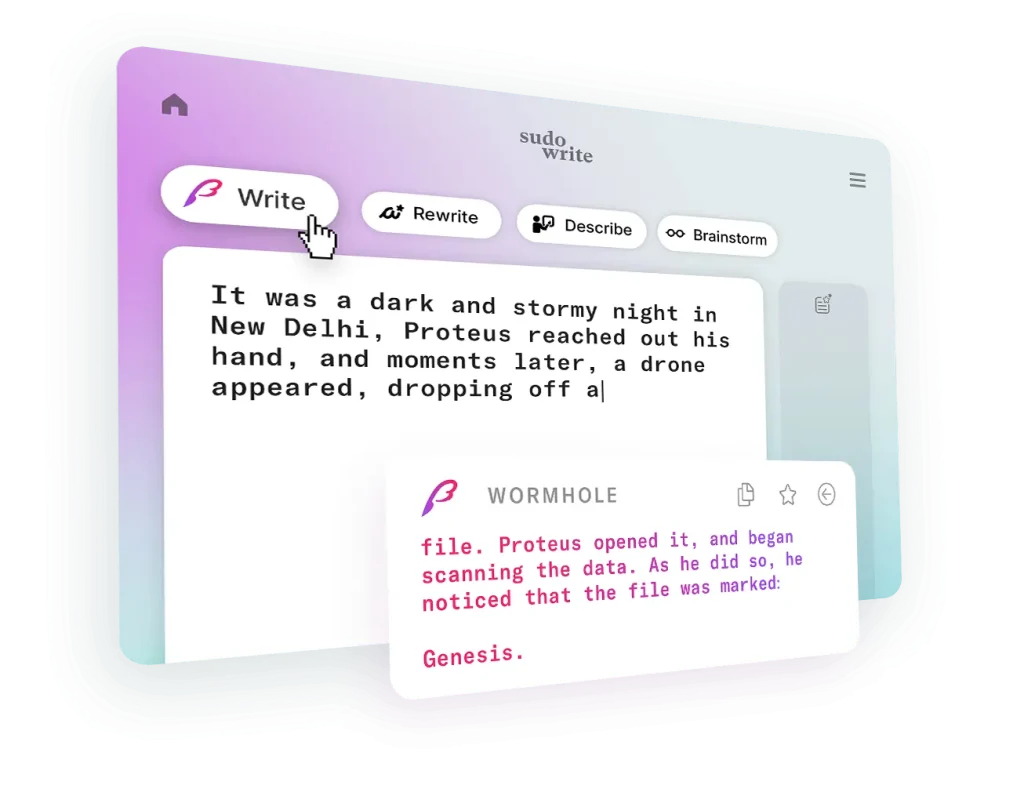
Type out the setup, then use Write to suggest the next 300 words in your voice. You'll get options. Pick the best one. Edit it. Build from there.
For enemies-to-lovers, this scene should crackle with friction. For second chance, there should be a gut-punch of buried emotion. Match the energy to your trope.
Day 12-13: Establish Stakes
By the end of Act One, readers need to know:
Use Sudowrite's Describe tool to write rich sensory moments here. It generates details that ground your reader in the scene without dumping paragraphs of description.
Day 14: Review and Pacing Check
Don't barrel forward without looking back. Use Sudowrite's Feedback tool on your Act One draft.
It will flag three actionable areas for improvement. Things like pacing being too slow, characters feeling flat, or dialogue being on-the-nose.
Act on at least one of the three suggestions before moving to Act Two.
🔄 Week 3: Writing Act Two, Part 1 (Days 15-21)
Act Two is the hardest part of any novel. It's long. It's where most writers abandon their drafts.
Target: 1,700 words per day. Keep moving, even if the prose isn't perfect. You can fix ugly later. You can't edit a blank page.
Day 15-16: First Turning Point
This is the moment your leads are forced into closer proximity or deeper conflict. Something shifts in the dynamic.
Use Sudowrite's Expand tool if scenes feel too rushed. It builds out a thin scene so the emotional beat lands properly. This is a life-saver for fast writers who write themselves into 200-word scenes that need to be 800.
Day 17-18: The Tension Escalates (💋 The Good Stuff)
This is where the attraction becomes undeniable. The almost-kiss. The moment one of them realises they're in trouble.
Use the NowKISS plugin in Sudowrite for intimate scene assistance. It's specifically built for romance and understands heat levels from sweet to explicit.
Pro tip: Match your heat level to your genre. Contemporary romance with a steamy tag needs actual heat in the build-up, not just behind-closed-doors fade-outs.
Day 19-21: Second Turning Point and Complication
Your characters are getting closer. Now something external or internal pulls them apart.
Use Sudowrite's Canvas to add this complication to your Story Bible so the AI stays consistent in later chapters.
Use Brainstorm to generate three possible complications. Pick the one that hurts the most. That's usually the right one. 😅
🔄 Week 4: Act Two Conclusion + Act Three (Days 22-28)
Day 22-23: The Dark Moment
Every romance novel has one. The point where it looks completely unsalvageable.
Someone says the wrong thing. A secret destroys trust. The external stakes peak at exactly the wrong moment. This moment needs to be the most emotionally devastating scene in your book.
Use Sudowrite's Rewrite tool to refine this scene until it genuinely stings. Rewrite offers infinite variations without getting tired. Run it five times if you need to.
Day 24-25: The Emotional Reckoning
After the dark moment, your characters must face the truth about themselves.
Not just “I love them.” But “I was wrong about X. I was protecting myself from Y. I need to change Z.”
Without this internal reckoning, the resolution feels fake. Readers feel cheated.
Sudowrite's Write tool is powerful here. Give it the emotional context from your Story Bible and let it draft the internal monologue. Edit it into your voice.
Day 26-27: The Grand Gesture and Resolution
The HEA needs to feel earned. Not a sudden change of heart, but the result of everything your characters have been through.
Use Describe to make this scene sensory and vivid. Where are they? What does the light look like? What does she smell when he walks in? Ground readers in the moment.
Day 28: Write Your Last Line
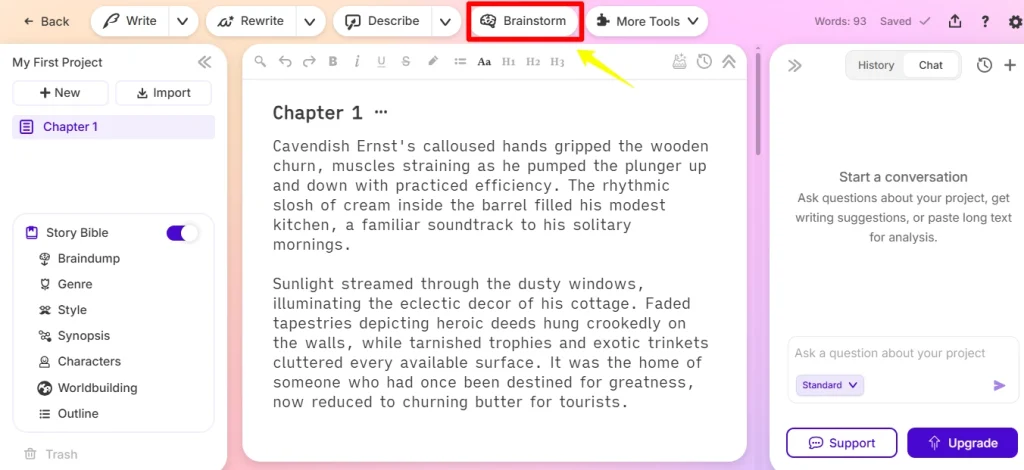
Romance readers remember last lines. Spend proper time here. Use Sudowrite's Brainstorm to generate twenty possible final lines. Pick one, then write the version of it that's entirely yours.
Days 29-30: First-Pass Edit
You now have a rough first draft. It's not polished. It doesn't need to be. That's not what day 30 is for.
Day 29: Structural Edit
Use Sudowrite's Feedback tool on three or four key chapters: your opening, your dark moment, and your resolution.
Ask:
Rewrite anything the tool flags as weak. Don't agonise. Make a note and move on.
Day 30: Line-Level Review
Do a final read of your first three chapters only. These are the chapters agents, publishers, and readers use to judge everything.
Use Rewrite to tighten flat sentences. Use Describe to add missing sensory detail. Use the Word Choice tool (two clicks!) to sharpen bland word choices.
Then stop. Your draft is done. 🎉
🎯 Top Sudowrite Tools Every Romance Author Should Use
| Feature | What It Does | When to Use It |
|---|---|---|
| Story Bible | Builds your full novel framework | Week 1, before writing |
| Brainstorm | Generates ideas, names, plot twists | Days 1-5, 19-21 |
| Write | Suggests next 300 words in your voice | All drafting days |
| Describe | Adds rich sensory detail | Act One/Three emotional scenes |
| Expand | Builds out rushed scenes | When scenes feel thin |
| Rewrite | Rewrites sentences/paragraphs | Editing phase |
| Feedback | Gives three improvement areas | End of each Act |
| Canvas | Visual story planning space | Days 5-6, adding complications |
| Plugins | 1,000+ specialised romance tools | Throughout |
| Visualise | Generates character art from descriptions | Character-building days |
⚡ Real Downsides of Using Sudowrite for Novel Writing
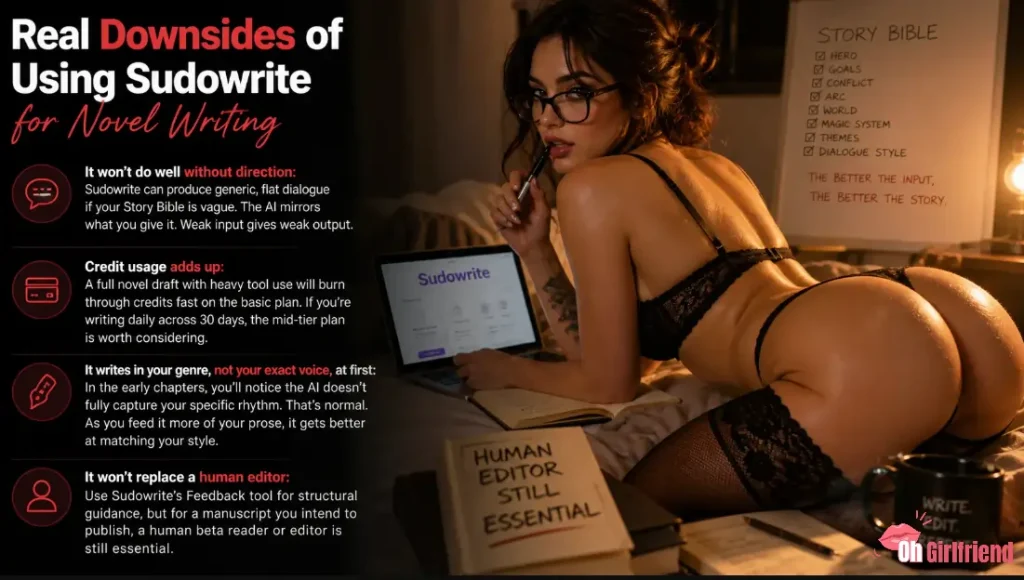
Look, Sudowrite is genuinely good. But fairness matters.
What it won't do well without direction: Sudowrite can produce generic, flat dialogue if your Story Bible is vague. The AI mirrors what you give it. Weak input gives weak output.
Credit usage adds up: A full novel draft with heavy tool use will burn through credits fast on the basic plan. If you're writing daily across 30 days, the mid-tier plan is worth considering.
It writes in your genre, not your exact voice, at first: In the early chapters, you'll notice the AI doesn't fully capture your specific rhythm. That's normal. As you feed it more of your prose, it gets better at matching your style.
It won't replace a human editor: Use Sudowrite's Feedback tool for structural guidance, but for a manuscript you intend to publish, a human beta reader or editor is still essential.

More From OhGirlfriend
✨ Is Sudowrite Worth It for Romance Writers in 2026?
Yes, with realistic expectations.
If you've been sitting on a romance idea for two years but never finished more than three chapters, Sudowrite genuinely helps you get unstuck and move forward. Its Story Bible feature alone is worth trying, because having your characters, world, and outline in one AI-aware document changes how you write.
The romance-specific plugins, the Muse 1.5 model trained on fiction, and tools like NowKISS and Mega Write Romance show that the platform actually understands the genre. It's not guessing what slow burn means.
For a first-time romance author who reads a lot, loves the genre, and wants practical help actually finishing a novel? Sudowrite is one of the most honest tools available for that exact goal. Start with the free trial. See how far one week gets you. Chances are, you'll be back for week two.

Lucas – your go-to wingman in the world of AI girlfriends and virtual flings. From testing voice moans and NSFW chatbots to rating roleplay realism and emotional depth, he’s tried everything so you don’t have to. Whether you’re chasing a cute cuddle bot or a full-on spicy fantasy AI, Lucas gives you the no-filter lowdown on who’s worth your time (and your late nights).
Affiliate Disclosure: This post may contain some affiliate links, which means we may receive a commission if you purchase something that we recommend at no additional cost for you (none whatsoever!)